
:: A. Philosophy, characteristics of new technological art, content and purpose
Article 1 - Philosophy
Article 2 - Properties of technological art
Article 3 - Objectives and contents

Article 1 - Philosophy

Despite the growing interest in various forms of artistic realizations, this nevertheless still is confronted with some limitations. Contemporary art is gaining in importance, but is only one facet of the overall contemporary artistic production. Art inspired by and in contact with the technological developments of today is not a mainstream interest. It is our aim to promote these contemporary art forms and further open them up to a wider audience.

From the very beginning, the Liedts Meesen Foundation has made a clear choice for these little known forms of artistic expression. This conscious choice is consistent with the transnational goals of the foundation.

This award is thus restricted to new technology art.

What the word cannot voice or what the letter cannot express is completed by artistic talent, but a lasting expression was realized through canvas and paint in the form of a two dimensional image, or through the cutting and grinding of stone or wood in order to create three-dimensional objects.

In the past, the artist had few ways to help him express his emotions, his commitment and his values. New forms have emerged: architecture, music, choreography, photography, cinematography, broadcasting, multimedia, ... have widened the boundaries of artistic expression and many restrictions from the past have been lifted. Today new sciences are used such as electronics, telecommunications, biology and genetics, as well as new materials such as steel, glass, plastics and fluids.

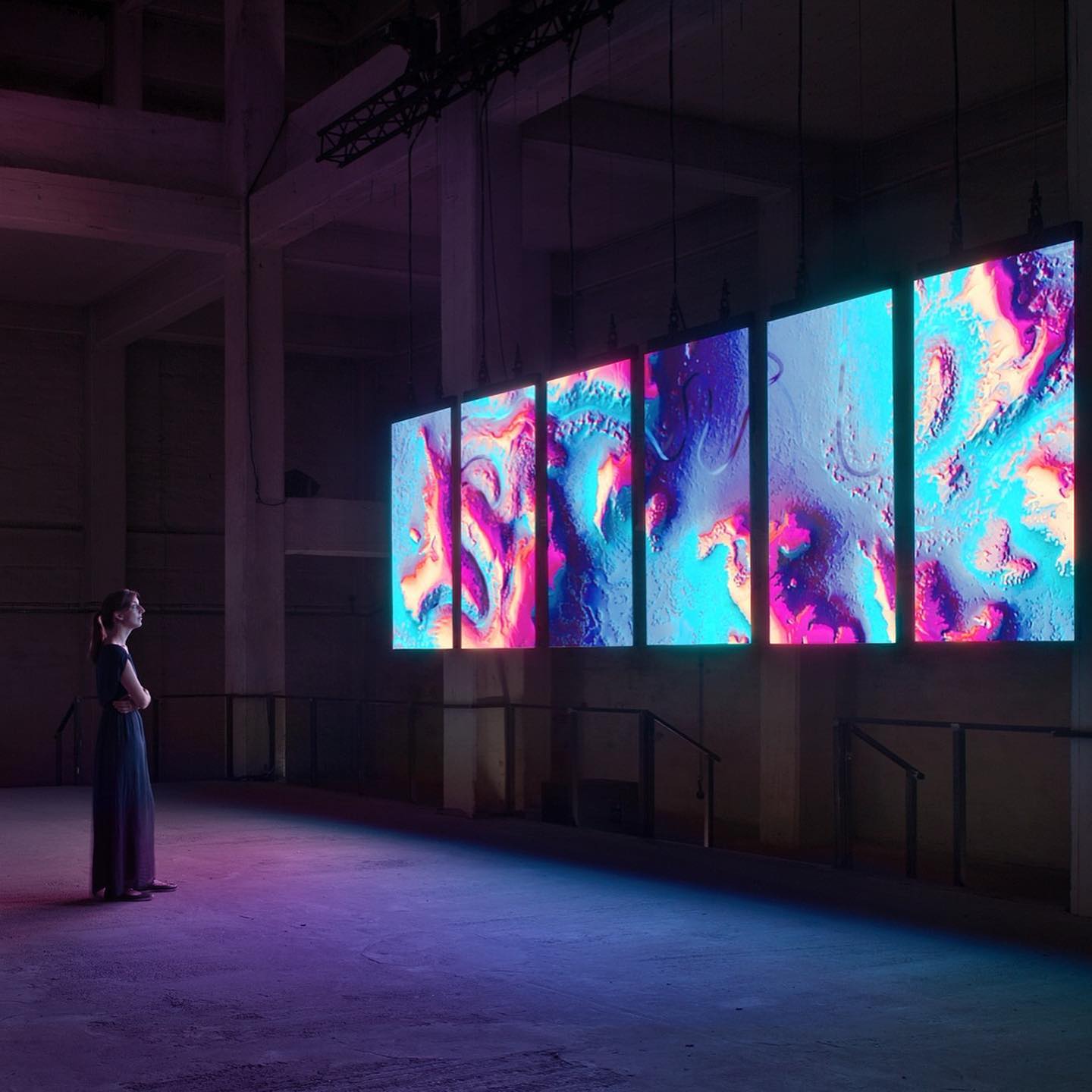
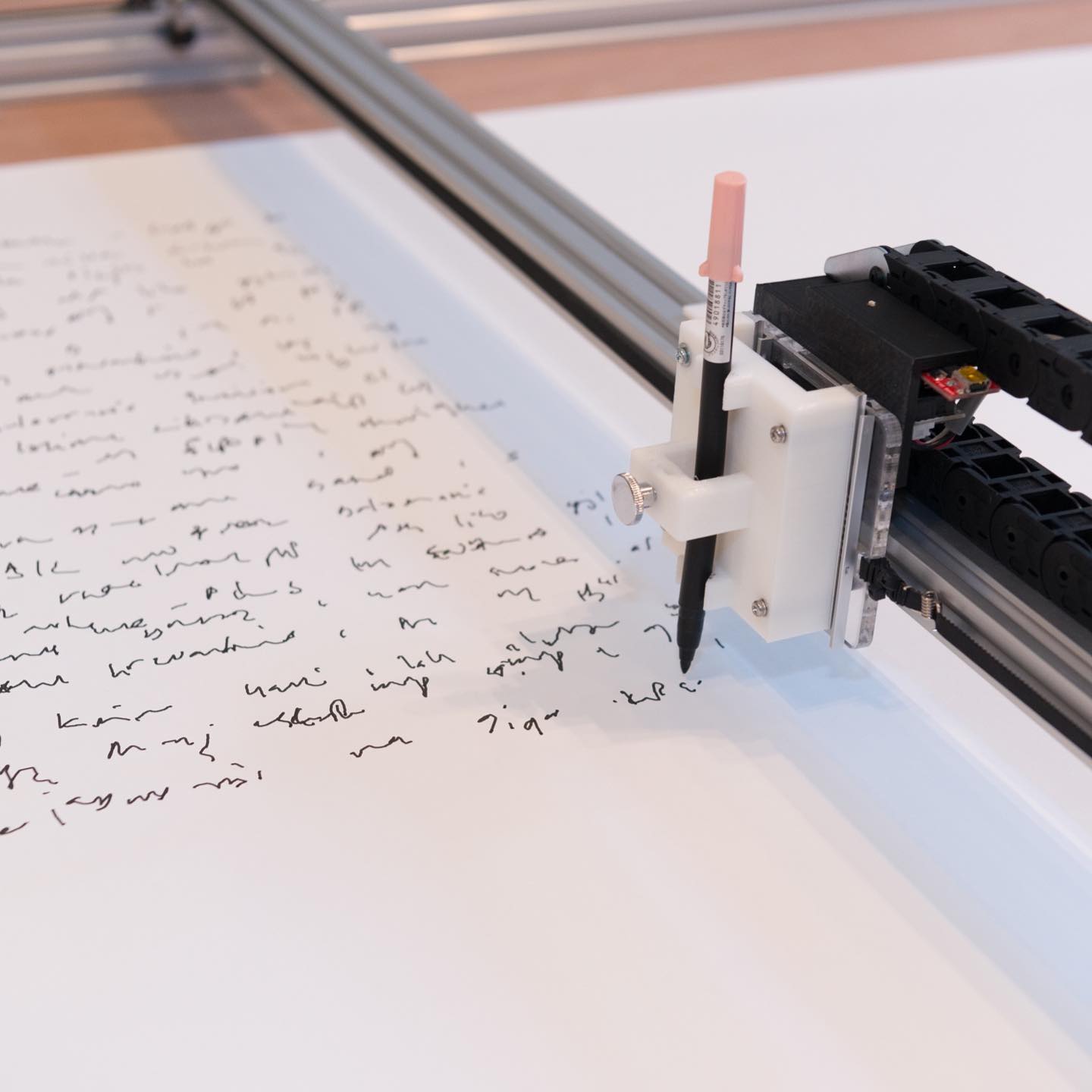
We situate the new technological art in these domains. This implies the use of new technologies, processes or materials but only as part of an artistic creation that does not neglect the aesthetics and artistic expression.

Article 2 - Properties of technological art

A classification of this multitude of shapes, colours and sounds on ever changing carriers is almost impossible to make, but some features are always coming back.

The creations are transnational or have universal characteristics: boundaries of religion, philosophy, economic background and geography are of no importance, thanks to the fact that the selected carriers are universally spread. Artists in this sense belong to a group who has become citizens of the world through the Internet. Technological Art thus quite easily exceeds the boundaries and must be open to very different sensibilities. A work of Technological Art belongs to the global culture and does not belong to the tradition nor the characteristics of minorities.

In the past, a painting or a sculpture could trigger emotions, could make a teenager blush, but the interaction was not reciprocal or was in any case limited. In works of technological art, the individual can directly or indirectly intervene in what he sees, hears, smells or feels. By maneuvers like blowing, shouting, ... he can directly influence the outcome of the creation. Indirectly he may intervene in the chemical, electronic or software processes and thus the necessary degrees of freedom, in order to influence the full interactivity and reciprocal creation. This was not possible in earlier art forms, even for music, film or broadcasting. There may have been some attempts in theater and architecture, but this activity was limited and usually not constructive.

The great diversity of these technologies and the unclassifiable nature of this technological art can be seen as an attribute. The topics are endless, every day the carriers are improved and updated. New tools and technologies arise. In most works the originality and the use of several procedures or techniques in parallel plays a major role. Finally, these resources are deployed in the various existing forms of art. This combination of resources also increases the diversity.

Article 3 - Objectives and contents

The New Technological Art Award from the Liedts-Meesen Foundation aims to reward young living artists for a work in the area defined above that was created in the past two years. The prize goes to a specific work that is submitted and not to different realizations of an artist.

:: B. Organization
Article 4 - Timing
Article 5 - Location
Article 6 - Structure

Article 4 - Timing

Following the announcement, artists will have the opportunity to submit the description of a project between November 1, 2011 and March 31, 2012. During the month of April, 20 projects will be selected, and this list will be announced on the website at the latest on May 1st, 2012. These projects will be realized in order to be exhibited from September 20 till November 18, 2012.

Article 5 - Location

The 20 projects will be exhibited at three selected locations: about 10 at Zebrastraat in Ghent, about 5 at iMAL (Center for Digital Cultures and Technology) in Brussels, and about five at La Cambre, also in Brussels. These latter works will be exhibited in the open air.

Article 6 - Structure

Between September 1st and September 19, 2012, the works will be built on the sites. The organizers of the competition reserve the right to choose the locations. An agreement will be made with each artist individually how this will be organized and what help the Liedts-Meesen Foundation can offer. The setting-up will be arranged in detail, based on the submitted file and in consultation with the artist.

:: C. Selection and assessment
Article 7 - Conditions of Participation
Article 8 – Selection
Article 9 – Evaluation

Article 7 - Conditions of Participation

All living artists, regardless of their origin, can present their candidacy for art works less than two years old, but which may already have been exhibited. Each artist may submit only one work. The contest is international and uses English as main language.

The registration can only be made on line by using an application form available on this website. This form cannot be sent unless all mandatory fields have been completed.

Article 8 – Selection

An international jury consisting of:

- Yves Bernard (Director iMAL -interactive Media Art Laboratory, Brussels (BE))
- Jean-Marie Dallet (Professor ESI -École Supérieure de L'Image, Angoulême (FR) and curator Update_1)
- Dirk De Wit (Director BAM-Instituut voor beeldende, audiovisuele en mediakunst (BE))
- Nick Ervinck (Artist (BE), Winner of the prize of the public Update_2)
- Julien Gachadoat (Artist (FR), Winner of the prize of the jury & of the public Update_3)
- Françoise Meesen (Liedts-Meesen Foundation, Zebrastraat Ghent (BE))
- Julien Maire (Artist (FR), Winner of the prize of the jury Update_2)
- Caroline Mierop (La Cambre-Directrice Ecole nationale supérieure des Arts visuels, Brussels (BE)/ Ter Kameren-Nationale Hogeschool voor Beeldende Kunsten, Brussels (BE))
- Stef Van Bellingen (Consultant Zebrastraat / Artistic leader of the Warp-Wase ARtistieke Projecten association (BE))
- Peter Weibel (Director ZKM-Zentrum für Kunst und Medientechnologie, Karlsruhe (DE))
- Organisation: Isolde De Buck (Art Consultant Zebrastraat)

will select 20 projects from all candidates before May 1st, 2012. This same jury will determine locations for the different works of art. The main criterion to do so will be the degree of conformity with the objectives and content of the contest. Works that for safety reasons or because of their dimensions (number of m² or m³ needed) cannot be presented, will be refused. The limitations in this respect can only by assessed by the jury or the managers of the locations.

Article 9 – Evaluation

At the end of the exhibition and at the time of the international conference, the jury will reward one art work. Throughout the duration of the exhibition, also each visitor with an entrance ticket can vote in favor of a work. The highest number of votes determines the winner of the public prize. In addition, talks are under way for the granting of a prize by the Brussels Capital Region for the works shown in Brussels, and by the Flemish Community for the work shown in Ghent.

:: D. Candidature
The applications can only be made by completing the registration form from this website. These must be submitted by no later than March 31st, 2012. All later applications will be rejected.
:: E. Administration
Article 10 - Prize
Article 11 - Publication
Article 12 - Dispute

Article 10 - Prize

For 2012, the Liedts-Meesen Foundation has foreseen a cash prize. This indivisible prize is associated with a work and its creator and amounts to 5.000 EUR. The jury is entitled, besides this prize, to honor an artist with an honorable mention. There is also a prize from the public linked to the contest. This entitles the winner to a presentation after the contest in a European museum. The prizes of the Brussels Capital Region and the Flemish Community are not yet known.

Article 11 - Publication

Each participant grants to the Liedts-Meesen Foundation the reproduction rights of his/her work selected for the contest.

Article 12 - Dispute

All disputes concerning this organization, for which these rules are inconclusive, will be decided by the jury and / or the Liedts-Meesen Foundation.

Powered by @Assist